
3rd Degree Non-Puperal Uterine Inversion in a Case at the Gynecological and Obstetrical Clinic, Aristide Le Dantec Teaching Hospital, Dakar, Senegal: Diagnostic and Therapeutic Aspects and Review of the Literature.
*Corresponding Author(s):
Omar GassamaAristide Le Dantec Teaching Hospital, Cheikh Anta Diop University, Dakar, Senegal
Email:omar.gass1.m@gmail.com
Abstract
The objective was to report a case of non-puerperal uterine inversion and to review the literature. Uterine inversion is an extremely rare gynaecological complication. It is more classically described as a serious obstetric complication exposing the woman to the risk of hemorrhage from cataclysmic delivery. We report the case of a 48-year-old woman, anemic, with 3rd degree uterine inversion on a fundal submucosal myoma. Surgical management was performed by a double approach: laparotomic and vaginal.
Keywords
Maternity Le Dantec; Uterine Inversion; Vaginal Hysterectomy
Introduction
Uterine inversion is an extremely rare gynaecological complication. It is more classically described in serious obstetric complications exposing the woman to the risk of haemorrhage from the cataclysmic delivery. We report the case of a 48-year-old woman, anemic, with 3rd degree uterine inversion on a fundal submucosal myoma. Surgical management was performed by a double approach: laparotomic and vaginal. Although rare and difficult to diagnose, acute non puerperal uterine inversion is a medical-surgical emergency caused by an expansive intracavitary process.
Our Observation
Clinic
It was about Mrs D.D, a 48 years old patient, 4th gesture 4th pare referred in our service for the management of a budding ulcerous mass delivered by the vulva and associated with metrorrhagia evoking an invasive cancer. In this history, there was a caesarean section at the time of her third delivery. Examination on admission found clinical anaemia and an extravascular mass of firm, locally necrotic consistency, about 7 cm in size. This mass is surmounted by an atrophic uterine mucosa that bleeds easily on contact as shown in figure 1.
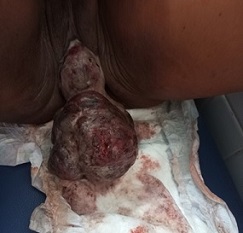 Figure 1: Image showing 3rd degree uterine inversion, seen at admission.
Paraclinic
Abdominal ultrasound revealed an empty uterine lodge and normal adnexae. In front of this picture, the diagnosis of 3rd degree uterine inversion by endocavitary myoma complicated by severe anaemia was evoked.
Therapeutic aspects
A hysterectomy with bilateral adnexectomy by abdominal and vaginal route is decided after correction of the anaemia. The operation begins with a Pfannenstiel incision. This confirms the diagnosis of uterine inversion by revealing an empty uterine lodge and pulled down adnexae. The myoma is removed vaginally. This allowed spontaneous reduction of the inversion. The rest of the operation is performed abdominally. The postoperative follow-up was simple and the patient was discharged 4 days later.
Figures 2 & 3 show the images at the end of the operation.
 Figure 2: Image showing the patient with 3rd degree uterine inversion at the end of the operation.
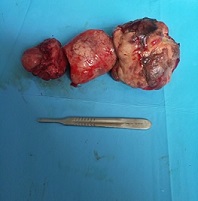 Figure 3: Image showing the operating room.
Discussion
Clinic
Uterine inversion is a rare and serious complication characterized by the inversion of the uterus into a glove finger. Several degrees are described according to the location of the uterine fundus:
- 1st degree: depression of the vaginal fundus in "bottom of flask"
- 2nd degree: crossing the external orifice of the cervix
- 3rd degree: uterine fundus intra-vaginal or even externalized at the vulva
- 4th degree: participation of the vaginal walls in the turning
It can be puerperal or non-puerperal. In the postpartum period, its frequency is estimated at 1/100,000 deliveries in France [1]. Outside the puerperal period, there are no epidemiological data. Cases are sporadic [2]. In the literature, 56 cases have been reported between 1976 and 2014. In the majority of cases, these cases involved postmenopausal women or women over 45 years of age [3]. Four cases of uterine inversion on embryonic rhabdomyosarcoma in adolescents have been described [4-7]. In 2018 Kean and Altman published a case of uterine inversion caused by uterine carcinosarcoma [8]. A case of uterine inversion by uterine hemangioma is reported by Tsai et al., in 2019 [9]. However, the most frequent etiology found by the authors remains submucosal myoma [3]. This was the case for our patient. Two conditions are necessary for uterine inversion to occur: uterine hypotonia and sufficient cervical dilatation. Several factors are involved in the pathophysiology of non-puerperal uterine inversion: the presence of a uterine tumor located preferentially on the uterine fundus; on a thin uterine wall; with a small tumor pedicle; rapid tumor growth; and cervical dilatation by distension of the uterine cavity. Clinical diagnosis of uterine inversion is difficult unless the fundal depression can be palpated on bimanual examination, and its presence may not be noticed before surgery [10]. In our patient the endocavitary tumor was located at the fundal level.
Paraclinic
Imaging can help evoke the diagnosis [11]. In our patient the diagnosis was evoked on clinical examination.
Therapeutic aspects
Several treatments have been described in the literature: conservative treatment when reduction of uterine inversion is possible, mainly in the case of 1st or 2nd degree uterine inversion. Radical treatment is preferred when there is no desire for pregnancy, and is almost indispensable in cases of 3rd and 4th degree uterine inversion. Hysterectomy can then be carried out vaginally, exposing the surgeon to technical difficulties due to changes in the usual anatomical landmarks, particularly with regard to the excretory urinary tract (ureters and bladder). The abdominal route is also described but it requires reduction of the inversion with restitution of the uterus into the pelvic cavity. The combination of laparoscopy and the vaginal route already described by the team of Auber et al [12]. Seems to be a good alternative for confirming the diagnosis, assessing the degree of ischaemia of the adnexae and vagina, and devascularising the uterus by laparoscopy by checking the uterine pedicle at its origin. For our patient, a double route combining laparotomy and vaginal route allowed the diagnosis to be confirmed and the hysterectomy to be carried out. In the literature, uterine artery embolization is indicated in chronic non-puerperal uterine inversions, generally of the 2nd and 3rd degree, and in acute reducible puerperal inversions in the context of conservative treatment [2].
Conclusion
Non-puerperal uterine inversion is a rare complication whose diagnosis, particularly etiological, is difficult in preoperatively, given the urgency of the situation in the majority of cases. Total hysterectomy by double laparotomy and vaginal approach is a reliable and safe operating technique.
References
- Jerbi M, Iraqui Y, Jacob D, Truc JB (2004) [Puerperal uterine inversion: About two cases]. Gynecol Obstet Fertil 32: 224-227.
- Pelissier-Komorek A, Lucereau-Barbier M, Diab J, Gavillon N, Graesslin O (2013) [Acute non-puerperal uterine inversion the third degree]. Gynecol Obstet Fertil 41: 130-132.
- Lupovitch A, England ER, Chen R (2005) Non-puerperal uterine inversion in association with uterine sarcoma: Case report in a 26-year-old and review of the literature. Gynecol Oncol 97: 938-941.
- Ojwang SB, Rana F, Sayed S, Aruasa WK (2006) Embryonal rhabdomyosarcoma with uterine inversion: Case report. East Afr Med J 83: 110-113.
- Sharma A, Rajaram S, Goel N, Singh UR, Ghumman S, et al. (2006) Uterine rhabdomyosarcoma presenting as acute inversion in an adolescent. Aust N Z J Obstet Gynaecol 46: 60-61.
- da Silva BB, Dos Santos AR, Bosco Parentes-Vieira J, Lopes-Costa PV, Pires CG, et al. (2008) Embryonal rhabdomyosarcoma of the uterus associated with uterine inversion in an adolescent: A case report and published work review. J Obstet Gynaecol Res 34: 735-738.
- Kean SL, Altman AD (2019) Uterine Inversion as a Result of a Large Prolapsed Carcinosarcoma of the Uterus. J Obstet Gynaecol Can 41: 1181-1184.
- Tsai YF, Chen TH, Yeh KT, Tsai HD, Chen M (2019) Complete non-puerperal uterine inversion caused by uterine hemangioma: A case report. Taiwan J Obstet Gynecol 58: 688-691.
- Case AS, Kirby TO, Conner MG, Huh WK (2005) A case report of rhabdomyosarcoma of the uterus associated with uterine inversion. Gynecol Oncol 96: 850-853.
- Moodley M, Moodley J (2003) Non-puerperal uterine inversion in association with uterine sarcoma: Clinical management. Int J Gynecol Cancer 13: 244-245.
- Bertrand S, Randriamarolahy A, Cucchi JM, Brunner P, Bruneton JN (2011) Uterine inversion caused by a submucous leiomyoma. Clin Imaging 35: 478-479.
- Auber M, Darwish B, Lefebure A, Ness J, Roman H (2011) Management of nonpuerperal uterine inversion using a combined laparoscopic and vaginal approach. Am J Obstet Gynecol 204: 7-9.
Citation: Gassama O, Diop G, Toure Y, Cisse M, Fall KBM, et al. (2025) 3rd Degree Non-Puperal Uterine Inversion in a Case at the Gynecological and Obstetrical Clinic, Aristide Le Dantec Teaching Hospital, Dakar, Senegal: Diagnostic and Therapeutic Aspects and Review of the Literature. HSOA J Reprod Med Gynaecol Obstet 10: 209.
Copyright: © 2025 Omar Gassama, et al. This is an open-access article distributed under the terms of the Creative Commons Attribution License, which permits unrestricted use, distribution, and reproduction in any medium, provided the original author and source are credited.