
An Unusual Cause of Neonatal Sepsis: Streptococcus Pneumoniae
*Corresponding Author(s):
Mohamed SelloutiFaculty Of Medicine And Pharmacy, Neonatal Medicine And Intensive Care Unit, Mohammed V Military Teaching Hospital, Rabat, Morocco
Tel:+212-002-126-606-274-66,
Email:msellouti@gmail.com
Abstract
Streptococcus pneumoniae is an uncommon etiology of neonatal sepsis but is linked to severe complications and elevated mortality rates. Transmission often occurs during labor and delivery via vertical spread from maternal genital tract colonization. Affected neonates typically exhibit early-onset symptoms, resembling sepsis caused by Streptococcus agalactiae (Group B streptococcus) or Escherichia coli, with clinical signs emerging within the first two days post-delivery. However, S. pneumoniae demonstrates a distinctly higher virulence profile, characterized by a greater propensity to invade neonatal tissues relative to maternal colonization rates compared to S. agalactiae. We present a fatal case of early-onset neonatal sepsis attributed to S. pneumoniae, likely resulting from ascending perinatal transmission.
Keywords
Streptococcus pneumoniae; Neonatal sepsis; Perinatal infection; Ascending transmission
Introduction
Streptococcus pneumoniae is a rare but severe cause of neonatal sepsis, characterized by significant morbidity and mortality rates. Current estimates indicate that pneumococcal sepsis accounts for 1–10% of all neonatal sepsis cases [1]. Transmission occurs through vertical routes, either via ascending infection from maternal genital tract colonization or hematogenous spread through placental transfer. Key risk factors include preterm birth, low birth weight, prolonged rupture of membranes, and maternal colonization [2,3].
While prevention strategies continue to advance, further research is critical to elucidate the pathogenesis of this frequently fatal infection and inform targeted interventions. This case report describes a neonate with early-onset S. pneumoniae sepsis that resulted in fatal outcomes, underscoring the urgent need for enhanced preventive measures.
Case Report
A 30-year-old primigravida at 38 weeks and 6 days of gestation presented with a four-hour history of abdominal pain, afebrile, and no other systemic symptoms. Her prenatal course included four routine visits without complications, and she received no intrapartum antibiotics. Spontaneous rupture of membranes occurred 30 hours prior to delivery, with no maternal fever or signs of infection. A male infant was delivered via uncomplicated vaginal birth, with Apgar scores of 8 and 9 at 1 and 5 minutes, respectively. At six hours postpartum, the neonate developed tachypnea (respiratory rate >60/min) and hypoxemia (SpO2 < 90%), prompting admission to the neonatal intensive care unit (NICU). Initial management included continuous positive airway pressure (CPAP), stabilizing oxygen saturation above 90%, with resolution of tachypnea within three hours. At 12 hours of life, the infant experienced sudden-onset apnea, mottled skin, and prolonged capillary refill (>3 seconds). Immediate intubation and mechanical ventilation were initiated, alongside umbilical venous catheter placement. Empirical antibiotics (cefotaxime 50 mg/kg every 12 hours and gentamicin 5 mg/kg daily) were administered after obtaining blood cultures. Lumbar puncture was deferred due to hemodynamic instability. Chest radiography revealed a right lower lung infiltrate (Figure 1).
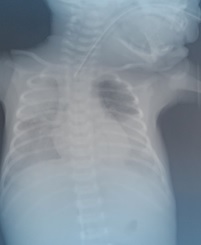 Figure 1: A chest radiograph showed a reticulogranular pattern in both lung fields
The clinical condition deteriorated rapidly, with progressive respiratory failure, refractory metabolic acidosis (pH < 7.1), and hypotension unresponsive to fluid resuscitation, high-dose norepinephrine, and dobutamine. Laboratory findings included leukopenia (2,500/mm³), neutropenia (980/mm³), and normal platelet count (265,000/mm³) and CRP (4 mg/dL). Despite aggressive interventions, the infant succumbed at 20 hours of life.
Postmortem blood cultures identified Streptococcus pneumoniae serotype 28A, susceptible to penicillin. Maternal vaginal swab cultures confirmed colonization with the same pathogen and serotype, suggesting vertical transmission as the likely etiology.
Discussion
Streptococcus pneumoniae remains an uncommon yet severe etiology of neonatal sepsis, associated with elevated mortality rates ranging from 1% to 11% in reported studies, with fatalities reaching up to 60% [2,3]. Recent epidemiological data highlight that the majority of cases manifest within the first week of life, particularly within the initial 48 hours postpartum [4].
The primary transmission route for neonatal pneumococcal infection is vertical, typically via ascending colonization from the maternal genital tract. While the acidic vaginal environment generally inhibits S. pneumoniae survival, physiological changes during pregnancy reduce vaginal acidity, facilitating transient colonization [3]. Despite this, maternal vaginal carriage rates remain low (0.03%–0.75%), with potential sources including oro-genital contact, contaminated medical instruments, or improper hygiene practices [3,5]. Hematogenous transmission, though less common, is also documented [3]. In the presented case, maternal screening for genital tract colonization was omitted, underscoring a potential gap in prenatal care.
Notably, traditional risk factors for neonatal sepsis such as prematurity, prolonged rupture of membranes, or chorioamnionitis do not correlate strongly with S. pneumoniae infections [6]. However, maternal colonization significantly elevates neonatal risk; studies indicate that nearly all infants born to colonized mothers develop invasive disease, with mortality rates exceeding those observed in Group B streptococcal (GBS) sepsis [6,7]. This warrants clinical consideration of maternal S. pneumoniae colonization as a pathological finding requiring targeted intervention.
Clinically, early-onset pneumococcal sepsis mimics other bacterial etiologies (e.g., Escherichia coli, GBS), presenting with nonspecific signs such as respiratory distress, lethargy, or feeding difficulties [8]. Intriguingly, meningitis—typically linked to late-onset infections has been reported more frequently in early-onset cases, as noted by Olarte et al. [9]. In this case, the absence of lumbar puncture precluded definitive exclusion of meningeal involvement.
Empirical treatment with penicillin or cefotaxime remains standard, guided by susceptibility profiles [10]. Preventive strategies are critical given the high morbidity and mortality. While maternal vaccination with pneumococcal polysaccharide vaccines (e.g., 23-valent PPV) aims to confer passive immunity, current protocols, such as Australia’s late-adulthood vaccination schedule, show limited efficacy in protecting pregnant women [11]. Emerging proposals advocate for third-trimester maternal immunization to enhance neonatal protection, though robust clinical evidence remains pending [11].
Conclusion
Neonatal Streptococcus pneumoniae infections, as demonstrated in this case, are associated with severe clinical outcomes and significant mortality rates, particularly in early-onset presentations. Prevention remains a cornerstone of management, necessitating proactive prenatal screening to identify genital tract colonization. Detection of S. pneumoniae in maternal specimens should prompt immediate neonatal evaluation and empirical antibiotic prophylaxis, even in asymptomatic infants, to mitigate the risk of invasive disease.
Consent
Written informed consent was obtained from the patient for publication of this case report.
Disclosure
This clinical case was written based on clinical observation without any funding.
References
- McDonald LC, Bryant K, Snyder J (2003) Peripartum transmission of penicillin-resistant Streptococcus pneumoniae. J Clin Microbiol 41: 2258-2260.
- Hoffman JA, Mason EO, Schutze GE, Tan TQ, Barson WJ, et al. (2003) Streptococcus pneumoniae infections in the neonate. Pediatrics 112: 1095-1102.
- Rodriguez BF, Mascaraque LR, Fraile LR, Perez IC, Kuder K (2014) Streptococcus pneumoniae: The forgotten microorganism in neonatal sepsis. Fetal Pediatr Pathol 34: 202-205.
- Sallam A, Paes B (2004) Streptococcus pneumoniae: An old bug with significant maternal-newborn implications. Am J Perinatol 21: 491-495.
- Dias MFA, Silva NR, Garces F (2016) Neonatal serotype 8 pneumococcal invasive disease: A happy ending in a potentially fatal disease. BAOJ Pediatr 2: 016.
- Gomez M, Alter S, Kumar ML, Murphy S, Rathore MH (1999) Neonatal Streptococcus pneumoniae infection: Case reports and review of the literature. Pediatr Infect Dis J 18: 1014-1018.
- McAdams RM, Garza-Cox S, Yoder BA (2005) Early-onset neonatal pneumococcal sepsis syndrome. Pediatr Crit Care Med 6: 595-597.
- Hughes BR, Mercer JL, Gosbel LB (2001) Neonatal pneumococcal sepsis in association with fatal maternal pneumococcal sepsis. Aust N Z J Obstet Gynaecol 41: 457-458.
- Olarte L, Barson WJ, Bradley JS, Tan TQ, Lin PL, et al. Invasive pneumococcal disease in infants aged 0–60 days in the United States in the 13-valent pneumococcal conjugate era. J Pediatric Infect Dis Soc 17: 249-252.
- Khalifa K, Agarwal M (2004) Neonatal Streptococcus pneumoniae sepsis: Rare but fatal. Internet J Pediatr Neonatol 5: 202-205.
- Chaithongwongwatthana S, Yamasmit W, Limpongsanurak S, Lumbiganon P, Tolosa JE (2015) Pneumococcal vaccination during pregnancy for preventing infant infection. Cochrane Database Syst Rev 2015: CD004903.
Citation: Sellouti M, Saghir S, Ayad A, Bahouss M, Abilkassem R (2025) An Unusual Cause of Neonatal Sepsis: Streptococcus Pneumoniae. J Neonatol Clin Pediatr 12: 138.
Copyright: © 2025 Mohamed Sellouti, et al. This is an open-access article distributed under the terms of the Creative Commons Attribution License, which permits unrestricted use, distribution, and reproduction in any medium, provided the original author and source are credited.