Production and Sensory Evaluation of Composite Jam Produced from Three Different Tropical Fruits
*Corresponding Author(s):
Laveena KBDepartment Of Postgraduate Studies And Research In Biosciences, Mangalore University, Mangalagangothri, Mangalore, Karnataka, India
Email:laveenavenkatesh@gmail.com
Abstract
Introduction: Tropical fruits like banana, orange, and apple are widely available and rich in nutrients, flavour, and aroma. Jam production is a great way to preserve and utilize these fruits. Traditional jam production often focuses on a single fruit type. This study explores the production and sensory evaluation of a composite jam made from a combination of apple, banana, and orange.
Objectives: The aim of this study is to develop a composite jam using apple, banana, orange and combination of these three fruits and to evaluate its sensory properties.
Study Approach: Tropical fruits were selected and jam was prepared by following traditional method of jam preparation. Jam is also produced using a combination of the three fruits (apple, banana and orange). Sensory evaluation by a panel of judges using a hedonic scale for attributes like taste, texture, color, and overall acceptability. The sensory evaluation results showed that orange jam was the most preferred among the three composite jams, with significantly higher scores for taste and texture. Based on the overall acceptability scores, the jams are ranked in the following order orange jam (8.5±0.5), banana jam (7.8±0.28), apple jam (7.33±0.76). Pairwise comparison tests revealed significant differences (p < 0.05) in the taste, texture and overall acceptability scores between the orange jam and the other two jams. No significant differences were found between the apple and banana jams. The sensory evaluation results showed that the mixed jam made from, Banana, Orange and Apple (BOA jam) received significantly high scores than the individual jams (banana, orange and apple) for all the attributes.
Results and Conclusion: The composite jam showed a unique flavour profile, combining the sweetness of banana, tartness of orange, and crunch of apple. Sensory evaluation revealed high scores for taste, texture, and overall acceptability. Colour and consistency were also rated positively. The composite jam produced from apple, banana, and orange was well-received by the sensory panel. The results suggest that the mixed BOA jam is promising product with high consumer acceptance. Its unique flavour profile and smooth texture make it a great option for consumers looking for a new and exciting jam experience. This study demonstrates the potential for creating a unique and delicious jam by combining different tropical fruits. The results can be used to develop new jam products and promote the utilization of underutilized fruits. Further research can explore different fruit combinations and processing techniques to enhance the sensory properties of the jam.
Keywords
Composite fruits; Jam; Sensory evaluation
Introduction
Jam is an example of fruit preserve usually made from pulp and juice of one fruit (whole fruit). It can be defined as cooked and gelled fruit purses packaged for long term storage which is normally used as bread spread, fillings and food jellies. The preparation of fruit jam traditionally involves the use of pectin as a gelling agent, although sugar or honey and citric acid may be added as well [1]. Good jam has a soft even consistency without distinct pieces of fruit, a bright colour, good flavour and a semi-jelled texture that is easy to spread but has no free liquid [2].
Nowadays, fruits and vegetables are increasingly vital for healthy food consumption. Not only are they highly recommended aspects of health-promoting diets, but they also contain minerals, phytochemicals, and vitamins [3-5]. Public awareness of the beneficial properties of fruits and vegetables continues to increase due to recommendations of dieticians and physicians, educational programs, and media [6]. However, poor availability and considerable post-harvest losses challenge both consumption and processing of fruits and vegetables. Moreover, fruits and vegetables are not always accessible at the same time due to peculiarities of location and seasonality.
The main objective of the study was to develop a composite jam using apple, banana, orange and combination of these three fruits and to evaluate its sensory characteristics.
Study Approach
Preparation of Jam
1kg of apple, banana and orange was taken. Jam was prepared separately. Peeled its skin, small slice was made. In non-stick pan 1 cup of water and sliced fruits was added and brought to boil. Cooked until the fruits become soft, then cooled and blended until it is smooth. 500gm of sugar was added and again brought to boil, 1tablespoon of lemon juice was added. To avoid boiling pulp lid was used and cooked for 10mins, until thick consistency appeared. If needed food colour can be added. Finally cooled the jam and stored in clean dry glass jar (Figure 1).
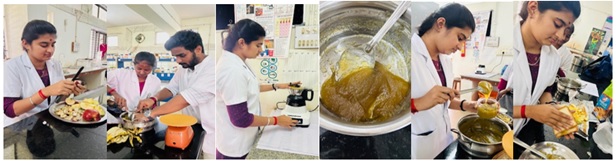 Figure 1: Preparation of composite jam using apple, banana, orange and combination of these three fruits.
Sensory Evaluation
The sensory evaluation was based on a 9-point hedonic scale according to the method described by Iwe [7], with slight modifications. Ten panellist’s (N=10) compared the sensorial variations between the different jams based on particular attributes. All the panellists reported zero allergy to the jam ingredients and participated in all sensory tests. Participation was voluntary, with verbal consent obtained prior to the evaluation. Participants were served with ~10g of each jam on white disposable plates with a slice of bread from the same loaf. The plates were coded with three-digit random numbers and distributed randomly among the panellists. The appearance, aroma, taste, and spread ability of the samples were evaluated according to a nine-point hedonic scale, where 1 represented “dislike extremely” and 9 represented “like extremely”. The overall liking was considered as the mean of other attributes. The panellists had clean potable water to rinse/clean their mouths between each taste session to ensure the integrity of the experiment. The participants completed the score sheets after tasting.
Results
Sensory evaluation includes such aspects as appearance, aroma, taste, etc., which cumulatively helps to reveal the overall liking. Typically, aroma plays a key role in the overall liking [8] (Table 1).
|
Sample/ Sensory Attributes Evaluated |
Banana Jam |
Orange Jam |
Apple Jam |
Mixed BOA Jam (Banana, Orange, Apple) |
|
Appearance |
||||
|
Colour |
Light yellow to golden brown |
Vibrant orange to deep amber |
Light golden to deep red-brown |
golden brown |
|
Texture |
Smooth, spreadable and slightly chunky |
Firm, jelly-like, and chunky (peel pieces) |
Thick, spreadable, and slightly chunky |
Smooth and slightly chunky |
|
Shape |
Uniformly filled jar, slightly rounded surface |
Uniformly filled jar, slightly rounded surface |
Uniformly filled jar, slightly rounded surface |
Uniformly filled jar |
|
Clarity |
Semi-transparent to opaque |
Transparent to semi-transparent |
Semi-transparent to opaque |
Semi-transparent to opaque |
|
Aroma |
||||
|
Intensity |
7/10 moderate-strong |
8/10 strong |
6/10 moderate |
8/10 strong |
|
Character |
Sweet, fruity, ripe banana |
Citrusy, sweet, orange peel, slightly bitter |
Sweet, fruity, ripe apple, slightly tart |
Complex, fruity, sweet with notes of banana, orange and apple |
|
Flavor |
||||
|
Intensity |
8/10 (strong) |
9/10 (very strong) |
7/10 (moderate) |
9/10 (very strong) |
|
Character |
Sweet, ripe banana, slightly floral and fruity |
Citrusy, bitter-sweet, orange peel |
Sweet, tart, ripe apple |
Complex, fruity, sweet, with notes of banana, orange, and apple |
|
Aftertaste |
Sweet, lingering banana flavor |
Lingering citrus bitterness but sweet. |
Crisp, refreshing apple flavor |
Lingering sweetness, fruity flavors |
|
Texture |
||||
|
Texture |
Smooth, spreadable, slightly chunky |
Firm, jelly-like, chunky (peel pieces) |
Thick, spreadable, slightly chunky |
Smooth, spreadable, slightly chunky |
|
Mouthfeel |
Creamy, velvety, slightly sticky |
Tart, slightly crunchy, refreshing |
Tart, slightly crunchy, refreshing |
Complex, fruity, slightly tart |
|
Smoothness |
8/10 (very smooth) |
6/10 (moderately smooth) |
7/10 (moderately smooth) |
8/10 (very smooth) |
|
Hedonic Testing (Likability/Preferability) |
||||
|
9-point Hedonic Scale |
5-netural |
9-like extremely |
9-like extremely |
9-like extremely |
|
5-point Likert Scale |
3- netural |
5- strongly like |
5- strongly like |
5- strongly like |
|
Overall Acceptability Scores |
7.8±0.28 |
8.5±0.5 |
7.33±0.76 |
8.83±0.28 |
Table: Sensory Characteristics of Banana, orange, apple and mixed BOA jams.
The sensory evaluation results showed that orange jam was the most preferred among the three composite jams, with significantly higher scores for taste and texture. Based on the overall acceptability scores, the jams are ranked in the following order orange jam (8.5±0.5), banana jam (7.8±0.28), apple jam (7.33±0.76). Pairwise comparison tests revealed significant differences (p < 0.05) in the taste, texture and overall acceptability scores between the orange jam and the other two jams. No significant differences were found between the apple and banana jams. The sensory evaluation results showed that the mixed jam made from, Banana, Orange and Apple (BOA jam) received significantly high scores than the individual jams (banana, orange and apple) for all the attributes.
Conclusion
The composite jam showed a unique flavour profile, combining the sweetness of banana, tartness of orange, and crunch of apple. Sensory evaluation revealed high scores for taste, texture, and overall acceptability. Color and consistency were also rated positively. The composite jam produced from apple, banana, and orange was well-received by the sensory panel. The results suggest that the mixed BOA jam is promising product with high consumer acceptance. Its unique flavour profile and smooth texture make it a great option for consumers looking for a new and exciting jam experience. This study demonstrates the potential for creating a unique and delicious jam by combining different tropical fruits. The results can be used to develop new jam products and promote the utilization of underutilized fruits. Further research can explore different fruit combinations and processing techniques to enhance the sensory properties of the jam.
Acknowledgement
We acknowledge with appreciation to Department of Biosciences, Mangalore University for their timely help and cooperation.
References
- Patten M (2005) Jams, Preserves and Chutneys Handbook. Grub Street, London, UK.
- Isabel DW, Willisam S (1990) Making Jams, Marmalades, Preserves and Conserves. University of Minnesota Extension School, Minneapolis, USA.
- Babajide JM, Olaluwoye AA, Shittu TAT, Adebisi MA (2013) Physicochemical properties and phytochemical components of spiced cucumber-pineapple fruit drink. Nigerian Food Journal 31: 40-52.
- Hoejskov PS (2014) Importance of fruit and vegetables for public health and food safety. WHO, Geneva, Switzerland.
- Timothy BO, Olalekan ASA, Rasheedat AF, Fatmata FJ (2019) Physicochemical, rheological and sensory attributes of honey sweetened jam produced from blends of carrot and cucumber. Journal of Food Stability 2: 1-14.
- Silva OO, Ayankogbe OO, Odugbemi TO (2017) Knowledge and consumption of fruits and vegetables among secondaryschool students of Obele Community Junior High School, Surulere, Lagos State, Nigeria. Journal of Clinical Sciences 14: 68-73.
- Iwe MO (2002) Handbook of sensory methods and analysis. Rojoint Communication Services Ltd, Uwani-Enugu, Nigeria.
- Nafisah S, Konadu L, Kafui SE (2020) Production and acceptability of jam produced from pineapple, watermelon and apple blends. EAS Journal of Nutrition and Food Sciences 2: 321-325.
Citation: Laveena KB, Bhat S, Vaishnavi, Nayak VR, Akshata Pai A, et al. (2025) Production and Sensory Evaluation of Composite Jam Produced from Three Different Tropical Fruits. HSOA J Food Sci Nutr 11: 225.
Copyright: © 2025 Laveena KB, et al. This is an open-access article distributed under the terms of the Creative Commons Attribution License, which permits unrestricted use, distribution, and reproduction in any medium, provided the original author and source are credited.