
A 3D Reconstruction Framework for Visualizing Environmental Crime Risk in Built Environments: A Forensic Spatial Analysis Approach
*Corresponding Author(s):
David S. ByrneCriminal Justice & Homeland Security, St. John’s University, New York, United States
Email:byrned@stjohns.edu
Abstract
Violent crimes are often influenced by visibility, access, and concealment, which are commonly attributed to lighting, building design, and environmental conditions. Features such as vegetation, obstructed sightlines, and natural landscapes can increase risk by creating concealment and entrapment cues. In this study, Augmented Reality (AR) was used to reconstruct a homicide case to examine how environmental conditions influenced victim selection and offender behavior. A three-dimensional AR model was developed using a case information of the conviction of the perpetrator in a shooting incident to include details to visualize lighting, sightlines, access routes, and physical obstructions, including trees, scaffolding, and surrounding apartment building design that obscured potential witness visibility. The reconstruction enabled a systematic spatial analysis of limited natural surveillance and concealed movement pathways, demonstrating how the victim was situated within a visually shielded area that reduced detection and facilitated offender confidence. Overall, AR-based reconstruction provides an evidence-informed method for visualizing environmental factors that shape offender decision-making and victim targeting in real-world homicide contexts.
Keywords
Augmented Reality; AR; Crime Prevention Through Environmental Design; CPTED; Spatial analysis; Three-Dimensional Modeling; Virtual Reconstruction.
Introduction
Crime is not randomly distributed but environmentally enabled. Opportunities for criminal activities increase where environmental conditions reduce visibility. Guardianship, spatial legibility, topography, and accessibility can increase concealment and provide opportunities for entrapment. Poor lighting, concealed vegetation, segregated housing layouts, and inactive public spaces collectively create situational conditions that offenders exploit. Conversely, well-lit, actively used, and visually open environments enhance natural surveillance and informal social control, thereby reducing crime risk. Augmented reality (AR) technologies provide a powerful tool to visualize environmental space by enabling three-dimensional reconstruction of lighting conditions, sightlines, spatial barriers, and movement pathways. Through immersive spatial modeling, AR allows researchers, planners, and investigators to assess how environmental design features affect criminal behavior, thereby enhancing crime prevention analysis and evidence-based environmental design strategies.
Literature Review
How Lighting, Building Design, Outdoor Space, and the Environment Create Opportunities for Crime
Across environmental criminology and Crime Prevention Through Environmental Design (CPTED), the built environment is treated as a crime-opportunity system: physical features shape visibility/guardianship, access and escape, target availability, and offender concealment. Empirically, studies repeatedly show that crime concentrates at small places and varies across micro-environments; meaning design and management choices (lighting placement, sightlines, permeability, maintenance) can either raise or lower opportunity in predictable ways. For example, robbery and violence “hot spots” are not constant; they shift by time of day and day of week, consistent with routine activity and movement patterns interacting with place features [1].
The dominant mechanism linking lighting to crime is surveillance: better lighting improves visual detection and recognition, reducing offenders’ ability to operate unseen. A large-scale field experiment in New York City public housing found that increasing outdoor lighting produced sizable reductions in outdoor nighttime serious crime—estimated at ~60% for outdoor nighttime index crimes in the core analysis and ≥36% in more conservative estimates accounting for spillovers [2].
At the same time, the relationship between light and crime can be crime-type specific. Using a “clock-change” design (abrupt shifts in ambient light without a direct lighting upgrade), one study found that darkness is associated with increases in robbery (and potentially arson and curfew/loitering), supporting the notion that reduced visibility and anonymity elevate opportunity for certain street crimes [3]. Importantly, lighting affects not only offending but also public perceptions and behavior. In street settings, perceived lighting quality is positively related to perceived environmental safety, but much of that relationship appears to operate indirectly through how lighting changes prospect (overview) and entrapment (ease of escape)—core cues people use to judge nighttime safety [4].
At the residential scale, street-network configuration and access routes strongly affect burglary vulnerability. A space-syntax analysis of housing layouts shows that burglaries concentrate where layouts are spatially broken up, with cul-de-sac patterns linked by footpaths, and especially where offenders can approach via rear footpaths (through or dead-end) that provide concealed access and low visibility. In contrast, long linear through carriageways with continuous “front-facing” entrances (i.e., stronger natural surveillance and intervisibility) showed “burglary-free” tendencies in the case analyses [5].
Public space use influences violence risk in a nonlinear way. In neighborhood-level analyses, active streets (visible street activity) showed an inverted-U association with violence outcomes: risk increased up to a point, but beyond certain thresholds more activity became protective—consistent with the idea that sufficient guardianship and informal social control can emerge when public space is widely and routinely occupied [6].
Vegetation can improve urban experience, but it can also create concealment and reduce lines of sight—conditions linked to fear and potentially to offender advantage. In studies of women’s safety perceptions in parks, participants reported avoiding places with poor lighting and dense understory vegetation or high tree density, which they associate with hiding opportunities and reduced visibility. This aligns with prospect–refuge logic: vegetation that reduces prospect or increases concealment/entrapment can raise perceived risk and may also increase situational opportunity for certain offenses [7].
On a broader urban scale, homicide is spatially clustered and associated with both built environment and socioeconomic conditions. In Toronto, higher homicide rates were associated (in some areas) with population density, material deprivation, commercial establishment density, and density of large buildings (multi-household structures), though relationships vary across neighborhoods (spatial heterogeneity) [8]. This suggests that built form (density, building type, commercial activity nodes) interacts with disadvantage and routine activity to shape where violent opportunities accumulate.
3D Simulation Technologies & Crime Prevention Through Environmental Design (CPTED)
Recent scholarship increasingly integrates Augmented Reality (AR), virtual reality (VR), and 3D simulation technologies into Crime Prevention Through Environmental Design (CPTED) research, emphasizing their value in visualizing environmental risk, spatial perception, and crime opportunity structures. Traditional CPTED focuses on principles such as natural surveillance, access control, territorial reinforcement, and activity support; however, emerging digital visualization technologies now allow these principles to be tested and evaluated in simulated environments before real-world implementation [9].
Virtual reality simulations have been identified as particularly useful tools for CPTED assessment because they can recreate real-life environments and allow users to experience spatial conditions such as lighting, visibility, and environmental layout at human eye level. In a CPTED-focused park study, researchers developed a 3D virtual model using Unreal Engine to simulate environmental conditions, including lighting, vegetation, and surrounding structures, demonstrating that immersive simulations can reveal areas that evoke anxiety and perceived insecurity consistent with real-world field observations [10]. This supports the premise that environmental cues influencing fear of crimes such as blind spots, poor lighting, and spatial isolation which can be systematically evaluated within controlled virtual settings.
Similarly, simulated virtual reality (SVR) experiments examining lighting environments in residential streets show that VR allows precise manipulation of environmental variables, including natural light, streetlamps, and interior building lighting, to measure their influence on fear of crime. Findings indicate that lighting composition and visibility significantly shape safety perception, reinforcing CPTED’s emphasis on natural surveillance and environmental design [11]. Importantly, VR provides methodological advantages over on-site studies by offering controlled, repeatable environments that isolate individual CPTED factors such as visibility, concealment, and spatial layout.
Beyond environmental perception, AR technologies have also demonstrated practical applications in policing and spatial situational awareness. Augmented content systems can deliver dynamic hotspot information and spatial overlays directly in the field, enhancing officers’ ability to interpret environmental risks and identify crime-relevant spatial features in real time. Research also highlights AR’s role in crime scene investigation and collaborative forensic analysis, where spatial annotations and overlays improve information exchange and contextual understanding of complex environments [12].
From an architectural and educational perspective, VR and AR technologies are increasingly linked to crime prevention and CPTED pedagogy. Virtual environments enable immersive learning experiences that deepen understanding of housing design, burglary risk, and urban safety by allowing users to interact with simulated spatial configurations and defensible space concepts [13]. These tools also support pre-implementation testing of design interventions, offering planners and researchers the ability to evaluate criminogenic design features and modify environmental layouts without real-world risk.
Collectively, the literature indicates that AR and 3D simulation technologies extend CPTED beyond static environmental assessment toward dynamic, evidence-based spatial analysis. By visualizing lighting, sightlines, access routes, and territorial boundaries in immersive environments, AR/VR platforms enhance the evaluation of natural surveillance, access control, and defensible space. As rendering fidelity and immersive capabilities continue to improve, these technologies hold significant promise for forensic reconstruction, crime prevention planning, architectural design, and educational training, providing a powerful interdisciplinary framework that bridges environmental criminology, forensic science, and spatial technology.
Research Question
How can Augmented Reality (AR)–based 3D spatial reconstructions of urban environments enhance the evaluation of CPTED principles, such as natural surveillance, access control, and territorial reinforcement in identifying environmental features (e.g., lighting, visibility, and concealment zones) that influence crime opportunity and perceived safety?
Methodology
This study employed a qualitative case study design integrating Augmented Reality (AR) to examine how environmental conditions aligned with Crime Prevention Through Environmental Design (CPTED) principles influence crime opportunity, visibility, and perceived safety. The research adopted a forensic reconstruction framework, in which a homicide case documented in a court decision was reconstructed in a three-dimensional spatial environment using AR technologies. This design allows for systematic evaluation of environmental criminology variables, specifically natural surveillance, access control, and concealment—within a controlled and repeatable digital setting.
Case Selection and Data Sources
A single homicide case was selected based on the availability of publicly accessible court records for the description of an execution-style shooting [14]. Records indicate that the murder occurred on a summer evening when the perpetrator walked up to the victim who was sitting on a bench in the courtyard of a public housing complex and shot him five times at close range and fled the scene in an unknown direction. Supplementary data sources included information describing the environmental context, spatial layout, and situational dynamics of the site, photographs, maps, architectural layouts, and environmental descriptions (e.g., lighting conditions, vegetation, scaffolding, and building configuration). These materials were used to ensure spatial accuracy and ecological validity during reconstruction.
3D Environmental Reconstruction
A three-dimensional virtual environment was developed to replicate the crime scene using Twinmotion digital modeling software combined with third-party applications to create digital assets. Twinmotion was selected due to its ease of use to rapidly construct and the simulated crime scene environment without necessitating sophisticated programming knowledge or advanced technical expertise [15]. The reconstruction incorporated key environmental variables relevant to CPTED analysis, including Lighting sources (natural and artificial illumination); building design and structural layout; vegetation density and landscape features; access routes and escape pathways; physical obstructions affecting witness visibility (e.g., trees, scaffolding, architectural barriers).
Spatial dimensions were modeled based on available measurements and scaled references. Environmental textures, lighting angles, and object placement were calibrated to reflect the temporal conditions as indicated in research of the area during that time period (e.g., time of day, illumination levels).
Augmented Reality Integration and Spatial Visualization
Following SVR model development, the virtual environment was integrated into an AR platform to enable immersive visualization and interactive spatial analysis. The AR system allowed researchers to overlay environmental features, trajectory lines, sightline paths, and concealment zones directly within the reconstructed scene. Multiple vantage points were examined to simulate the perspectives of the victim, offender, and potential witnesses. This process enhanced the evaluation of spatial visibility, guardianship levels, and environmental concealment in alignment with CPTED principles.
Analytical Framework: CPTED-Based Spatial Assessment
The reconstructed environment was analyzed using a CPTED-informed framework focusing on three primary components: 1) Natural Surveillance: assessment of sightlines, lighting distribution, and visibility obstructions. 2) Access Control: evaluation of environmental permeability, entry/exit routes, and offender movement pathways and 3) Territorial Reinforcement and Concealment: identification of visually shielded zones, environmental barriers, and spatial features that may reduce guardianship.
Spatial analysis included qualitative visual inspection and systematic comparison of visible versus obscured areas from multiple observation points within the AR environment.
Validation and Reliability Measures
To enhance methodological rigor, the reconstruction process incorporated triangulation through cross-referencing court documentation, environmental descriptions, and spatial modeling outputs. Iterative model refinement was conducted to ensure consistency between the reconstructed environment and documented case details. Additionally, repeated walkthroughs of the AR simulation were performed to verify spatial accuracy, scalability, and consistency in visibility and access interpretations.
Ethical Considerations
All data used in the reconstruction was derived from publicly available legal and case documentation. No personal identifying information beyond publicly documented records was utilized. The reconstruction was conducted solely for academic, forensic, and educational purposes, with careful attention to maintaining objectivity and avoiding speculative interpretation beyond documented evidence.
Methodological Limitations
Limitations include reliance on secondary case documentation, potential reconstruction bias due to incomplete environmental measurements, and limitations in replicating exact real-world lighting and perceptual conditions. While AR provides high spatial realism, virtual simulations cannot fully replicate human perception, environmental dynamics, or behavioral responses in live settings. Despite these limitations, the methodology offers a rigorous and defensible approach for examining environmental crime opportunities and CPTED variables through immersive spatial visualization.
Discussion
The results of the AR-based reconstruction support the theoretical premise of environmental criminology and CPTED that violent crime is strongly shaped by situational opportunity within the built environment. The spatial model demonstrated that environmental conditions—specifically limited lighting, obstructed sightlines, and structural barriers such as trees, scaffolding, and surrounding building design, collectively reduced natural surveillance and created a visually shielded micro-environment. This configuration likely increased offender confidence and facilitated victim selection by minimizing the perceived risk of detection from potential witnesses.
From a spatial perspective, the AR visualization revealed that the victim’s location was positioned within an area, although publicly accessible, that was characterized by concealment and restricted visibility, aligning with prospect–refuge theory and routine activity theory, where motivated offenders exploit environments with low guardianship and accessible escape pathways. The presence of environmental obstructions disrupted lines of sight from adjacent vantage points, suggesting that witnesses in nearby areas would have limited visual awareness of the incident. This finding is consistent with research indicating that poor lighting, dense vegetation, and architectural barriers can elevate crime risk by increasing concealment cues and reducing informal social control.
Importantly, the use of Augmented Reality enhanced forensic interpretation by transforming static court narratives into an immersive spatial analysis. The ability to simulate multiple perspectives, ingress and egress through movement pathways provided a more defensible understanding of how environmental design influenced offender decision-making. These findings suggest that AR reconstruction can serve as a valuable tool for forensic investigators, intelligence analysts, and crime prevention professionals by enabling evidence-based assessments of environmental risk factors.
However, the results should be interpreted within methodological limitations, including reliance on publicly available descriptions of the court case, maps, media accounts, and the reconstructed timelines and environmental assumptions. Despite these issues, the study demonstrates that AR-supported environmental visualization offers a rigorous framework for examining how visibility, access, and concealment interact to shape offender behavior and victim targeting in real-world homicide scenarios [Figures 1-8].
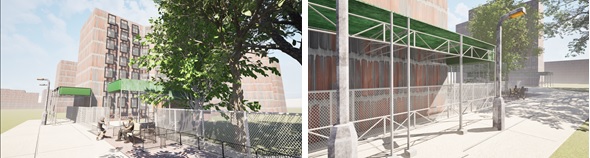 Figure 1: Conceptual Framework of AR-Based CPTED Environmental Analysis.
These two figures illustrate the integration of AR with Crime Prevention Through Environmental Design (CPTED) principles, demonstrating how environmental inputs (lighting, layout, visibility, and obstructions) are visualized to assess environmental risk, natural surveillance, and crime opportunity.
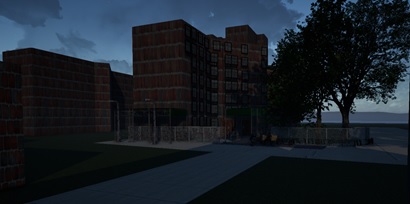 Figure 2: Three-Dimensional AR Reconstruction of the Incident Environment.
Immersive spatial model developed from court-based case documentation showing environmental layout, nightfall, building structures, vegetation, and physical obstructions used to replicate real-world spatial conditions relevant to visibility and guardianship.
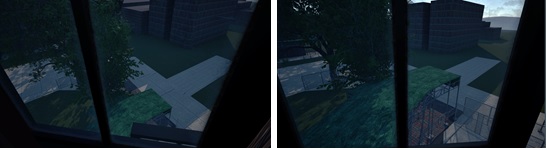 Figure 3: AR Visualization of Sightlines and Witness Visibility Zones.
Multi-perspective AR overlay illustrating lines of sight from potential witness vantage points, highlighting areas of obstructed visibility caused by environmental barriers such as trees, scaffolding, time-of-day, and architectural design features.
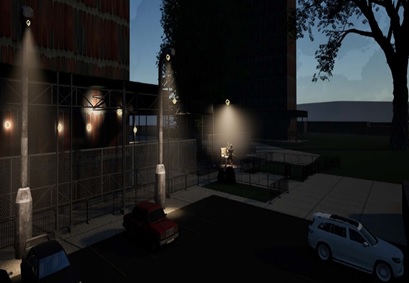 Figure 4: Concealment and Low-Guardianship Micro-Environment Mapping.
Spatial identification of visually shielded zones within the reconstructed scene where natural surveillance is reduced, indicating potential concealment areas that may increase situational crime opportunity.
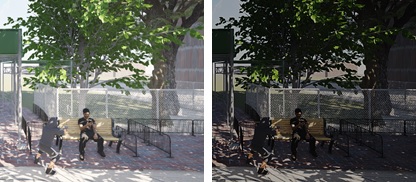 Figure 5: Environmental Lighting Simulation in the AR Model.
Comparison of simulated lighting conditions within the reconstructed environment demonstrating how variations in illumination influence visibility, perceived safety, and CPTED-based natural surveillance assessment.
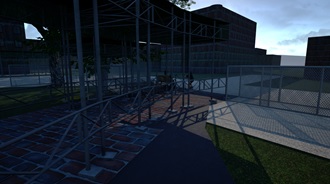 Figure 6: Access Routes and Offender Movement Pathway Analysis.
AR-generated spatial mapping of entry, approach, and exit pathways within the reconstructed environment, used to evaluate access control, environmental permeability, and potential offender mobility.
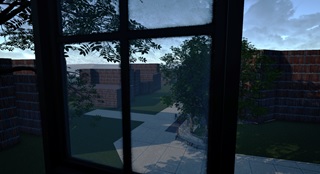 Figure 7: Victim Positioning Within the Spatially Shielded Environment.
AR depiction of the victim’s location relative to environmental obstructions and sightline barriers, illustrating how concealment and reduced visibility may influence victim targeting and offender decision-making.
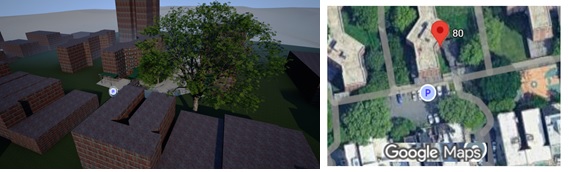 Figure 8: Comparative Visualization: Traditional 2D Scene Representation vs. AR Reconstruction.
Side-by-side comparison demonstrating the enhanced spatial clarity and environmental risk identification achieved through immersive AR reconstruction compared to conventional two-dimensional scene analysis.
Answer to Research Question
Augmented Reality (AR)–based 3D spatial reconstructions can significantly enhance the evaluation of CPTED principles by transforming static environmental observations into dynamic, immersive spatial analyses. Traditional CPTED assessments rely on site visits, photographs, and two-dimensional plans, which may limit the ability to fully understand how visibility, access routes, lighting, and environmental barriers interact in real-world crime contexts. AR, however, enables the reconstruction of environments in three dimensions, allowing researchers, investigators, and planners to visualize spatial relationships at human eye level and from multiple vantage points.
In terms of natural surveillance, AR models can simulate lighting conditions, sightlines, and obstructions such as vegetation, scaffolding, or building structures to identify blind spots and areas of reduced guardianship. This provides a more precise assessment of how visibility affects perceived safety and offender decision-making. Regarding access control, AR reconstructions can map movement pathways, entry and exit points, and environmental permeability, helping analysts evaluate how spatial layout either restricts or facilitates offender mobility. Territorial reinforcement can also be assessed by visualizing spatial boundaries, land-use transitions, and environmental cues that signal ownership or defensible space.
Additionally, AR allows controlled manipulation of environmental variables—such as lighting levels, spatial density, and structural design without altering the physical environment, making it a powerful tool for pre-implementation CPTED planning and forensic reconstruction. By overlaying environmental risk factors in an interactive 3D space, AR enhances situational awareness, supports evidence-based crime prevention strategies, and bridges environmental criminology with forensic visualization. Overall, AR-based spatial reconstruction provides a more systematic and defensible method for identifying criminogenic environmental features and improving CPTED-informed design, training, and investigative practices.
Conclusion
This study demonstrates that environmental conditions, including lighting, building design, outdoor spatial layout, and visual obstructions, play a critical role in shaping the opportunity structure for violent crime. The AR reconstruction of the homicide case revealed that limited visibility, obstructed sightlines from trees and scaffolding, and architectural features that reduced natural surveillance collectively created a concealed micro-environment conducive to offender action. These spatial characteristics likely influenced victim selection and increased offender confidence by lowering the perceived risk of detection and intervention.
By translating a court-based narrative into an immersive three-dimensional reconstruction, AR provided a clearer and more systematic method for examining how environmental factors such as access routes, concealment zones, and witness visibility interact within a real-world setting. The findings reinforce key principles from environmental criminology and CPTED, emphasizing that crime is not random but shaped by situational and spatial dynamics that either enable or prevent offender behavior.
Importantly, this research highlights the value of AR as an emerging forensic and investigative tool capable of enhancing crime scene interpretation, reconstruction accuracy, and evidentiary visualization. Integrating AR into forensic analysis allows investigators, analysts, and educators to better assess environmental risk factors and communicate complex spatial relationships in a defensible manner. Overall, the study underscores that evidence-based environmental design and advanced visualization technologies can significantly contribute to understanding offender decision-making and improving crime prevention strategies.
Limitations and Future Research
Limitations
Several limitations should be acknowledged when interpreting the findings of this AR/SVR-based CPTED reconstruction study. First, the reconstruction relied on publicly available court information and secondary environmental descriptions, which may not fully capture precise spatial measurements, lighting levels, or transient environmental dynamics present at the time of the incident. As a result, the virtual model represents an evidence-informed approximation rather than an exact replication of the original scene.
Second, although simulated virtual environments provide high spatial realism, they cannot fully replicate real-world perceptual, behavioral, and situational complexities. Human factors such as stress, movement, and real-time decision-making may differ significantly in a virtual setting compared to live environments. Additionally, environmental variables such as weather, sound, and pedestrian activity were not dynamically modeled, which may influence guardianship and perceived risk.
Third, single-case study design limits generalizability. While the reconstruction offers in-depth forensic and spatial insight, the findings cannot be broadly generalized across all homicide or crime contexts without additional comparative case analyses. Model interpretation may also be influenced by researcher subjectivity during spatial visualization and CPTED assessment.
Finally, technological constraints including rendering fidelity, lighting calibration, and device interface limitations, may affect immersion, spatial perception, and analytical precision within AR environments.
Future Research
Future studies should expand this methodology by incorporating multiple case reconstructions across different crime types and environmental settings to enhance external validity and comparative analysis. Integrating quantitative spatial metrics (e.g., visibility indices, line-of-sight mapping, and spatial accessibility modeling) would strengthen empirical rigor and reduce interpretive bias.
Further research should also explore the integration of real-world geospatial data, photogrammetry, and Geographic Information System (GPS)-based environmental mapping to improve reconstruction accuracy and environmental fidelity.
Additionally, future work should examine the pedagogical and investigative applications of AR in forensic science education, crime scene training, and law enforcement intelligence analysis, particularly for visualizing environmental risk and offender decision-making. Longitudinal research evaluating how AR-informed CPTED design interventions influence crime prevention outcomes in real environments would further advance the interdisciplinary integration of forensic science, environmental criminology, and immersive spatial technologies.
Acknowledgement
The authors would like to express sincere gratitude to St. John’s University Research Assistants Camryn Mendes and Raisa Zahin for their valuable support and contributions to this research. Their insights, constructive feedback, and guidance throughout the development of the AR reconstruction and CPTED framework were instrumental in strengthening the methodological rigor and conceptual direction of this study.
Declaration of the Use of AI Tools
The authors declare that they did not use AI tools in writing this paper.
Conflict of Interest
The authors would like to announce there is no conflict of interest.
References
- Herrmann CR (2015) The dynamics of robbery and violence hot spots. Crime Science4.
- Chalfin A, Lerner J, Hansen B, Parker L (2019) Reducing crime through environmental design: Evidence from a randomized experiment of street lighting in New York City, NBER Working Paper 25798
- Fotios SA, Robbins CJ, Farrall S (2021) The effect of lighting on crime counts. Energies14:
- Van Rijswijk L, Haans A (2017) Illuminating for safety: Investigating the role of lighting appraisals on the perception of safety in the urban environment. Environment and Behavior50: 889-912.
- Shu, Chih-Feng (2000) Housing layout and crime vulnerability. Urban Design International,
- Browning CR, Jackson AL (2013) The Social Ecology of Public Space: Active Streets and Violent Crime in Urban Neighborhoods. Criminology 51: 1009-1043.
- Hashim NHM, Thani SKSO, Jamaludin MA, Yatim NM (2016) A perceptual study on the influence of vegetation design towards women's safety in public park. Procedia - Social and Behavioral Science 234: 280-288.
- Mohammadi A, Bergquist R, Fathi G, Pishgar E, de Melo SN et al. (2022) Homicide rates are spatially associated with built environment and socio-economic factors: a study in the neighbourhoods of Toronto, Canada. BMC Public Health. 22: 1482.
- Lee JJ, Go MH, Kim YK, Joo M, Seo J, et al. (2020) A Multi-Component Analysis of CPTED in the Cyberspace Domain. Sensors, 20:
- Noh S, Lee Y (2019) How useful are virtual reality simulations to the field of crime prevention through environmental design? A Case Study Journal of Digital Landscape Architecture, 4: 158-176.
- Son D, Im B, Her J (2025) Street lighting environment and fear of crime: A simulated virtual reality experiment. Virtual Reality 29: 8.
- Engelbrecht H, Lukosch S (2020) Dangerous or desirable: Utilizing augmented content for field policing. International Journal of Human–Computer Interaction, 36:1415-1425.
- Benkoviocova L (2022) Linking virtual reality, architecture, and crime prevention for educational purposes. Architecture Papers of the Faculty of Architecture and Design STU. 27: 17-28.
- Brooklyn man sentences to 25 years to life in prison for Brownsville execution-style shooting (2025) Office of the Brooklyn District Attorney, Kings County, NY [USA].
- Byrne DS, Rizzo KJ, Bharat CI, Reyes JS (2026) Implementation of augmented reality technology for crime scene reconstruction: A case study of a shooting victim, Journal of Forensic Science & Criminal Investigation
Citation: Byrne DS, Budhai SA, Yates MA (2026) A 3D Reconstruction Framework for Visualizing Environmental Crime Risk in Built Environments: A CPTED and Forensic Spatial Analysis Approach. J Forensic Leg Investig Sci 12: 109.
Copyright: © 2026 David S. Byrne, et al. This is an open-access article distributed under the terms of the Creative Commons Attribution License, which permits unrestricted use, distribution, and reproduction in any medium, provided the original author and source are credited.